Technical Protocols for Microbial Containment and Professional Mold Remediation
Mold colonization is a direct consequence of unmitigated moisture intrusion within the building envelope, a pervasive issue that requires immediate, expert intervention to prevent systemic property damage. When liquid water breaches structural barriers, organic building materials—such as cellulose-based drywall, fiberglass insulation, and structural wooden framing—become fertile grounds for fungal propagation. In the humid environmental conditions characteristic of Pennsylvania, aggressive mold colonies can establish deep-seated root systems in less than 48 hours. Our remediation protocols prioritize the immediate, airtight isolation of the contaminated zone to prevent the migration of toxic spores into the HVAC system or unaffected living spaces. By establishing physical containment barriers and maintaining active negative air pressure, we ensure that microbial particulate and volatile organic compounds (VOCs) remain captured within the primary mitigation zone, safeguarding the rest of the structure from cross-contamination.
Once effective containment is verified, our restoration technicians initiate a rigorous structural decontamination process that far exceeds basic cleaning measures. This involves the systematic removal of non-salvageable, porous materials combined with the application of industrial-grade antimicrobial agents designed to treat all remaining structural surfaces. We utilize advanced specialized tools—including media blasters and high-efficiency HEPA vacuums—to remove deep-seated mold hyphae from framing members, ensuring that the root cause of the biological contamination is completely addressed. This systematic, engineering-based approach is vital for restoring high-quality indoor air standards and protecting the long-term health of residents in Pittsburgh, where chronic subterranean humidity levels often exacerbate indoor allergen profiles and create environments conducive to recurring mold blooms.
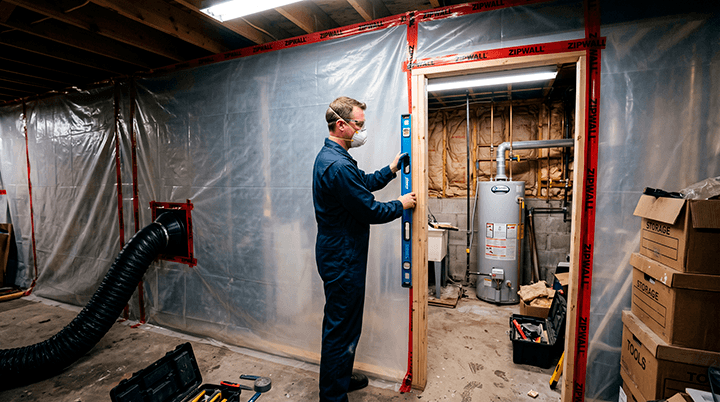 Physical containment and negative pressure zones utilized to isolate microbial contamination and protect non-affected areas.
HEPA Filtration and Advanced Air Scrubbing Technology
The core of our remediation strategy relies on industrial-grade High-Efficiency Particulate Air (HEPA) filtration systems, which are the industry standard for managing hazardous indoor particulates. During the physical removal of mold-damaged materials, thousands of micro-fine fungal spores are frequently released into the indoor atmosphere, threatening to infiltrate the entire property. To counteract this latent threat, we deploy high-capacity air scrubbers capable of processing massive volumes of air and trapping 99.97% of particulates down to 0.3 microns. By maintaining a continuous, automated air scrubbing loop throughout the entire remediation cycle, we effectively clean the indoor environment at the molecular level, preventing airborne spores from settling on surfaces throughout the building or being recirculated via the HVAC ductwork.
This air filtration protocol is absolutely essential for complex restoration projects in Allegheny County, where property density and structural complexity increase the risk of cross-contamination between adjoining residential or commercial units. Our equipment is routinely tested, calibrated, and serviced to ensure peak performance, providing the sustained high-capacity filtration necessary to meet certified clean air standards in both residential and industrial settings. We continuously monitor the indoor particle count using calibrated laser particle counters to verify that our air scrubbers are maintaining a safe, respirable environment for all building occupants during the active remediation process. This data-driven monitoring confirms that our technical efforts are successfully reducing the spore load to pre-loss, healthy levels.
Structural Decontamination and Intensive Surface Cleaning
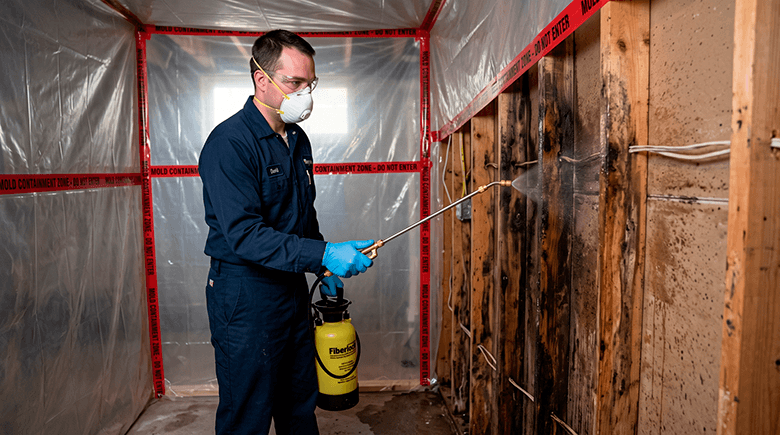
After the physical containment and removal of primary affected materials, specialists perform intensive surface decontamination to neutralize residual microbial activity that may have penetrated deep into porous structural members. We employ specialized mechanical cleaning tools, such as dry ice media blasting or intensive high-efficiency HEPA vacuuming, to strip away mold colonization from raw wood framing, concrete foundation walls, and metal building components. This multi-stage decontamination step is critical because mold hyphae can penetrate deep into the cellular structure of porous building materials, necessitating methods that go far beyond surface-level wiping or scrubbing.
Our comprehensive decontamination protocols also include the application of EPA-registered antimicrobial treatments specifically designed to inhibit future biological growth cycles. These professional-grade treatments penetrate deep into the cellular structure of remaining materials, providing a secondary, long-term layer of protection against persistent, moisture-related biological contamination. By combining precise physical removal with deep-penetrating chemical neutralization, we return the structural environment to a neutral state, fully prepared for final build-back and reconstruction. This rigorous approach prevents the 'hidden mold' phenomenon, where organisms remain dormant within the structure and return immediately when humidity levels spike in the future.
 Industrial HEPA air scrubbers deployed to capture airborne fungal spores and restore interior air quality.
Verification of Remediation Success and Safety Standards
A mold remediation project is technically complete only when Post-Remediation Verification (PRV) confirms that the environment meets industry-defined cleanliness and safety standards. Our internal process includes a thorough, multi-point visual inspection of all treated areas, combined with rigorous surface and airborne fungal testing if required by the insurance adjuster or the client. This third-party verification provides the objective, empirical evidence needed to prove that the structural contamination has been successfully neutralized and that the building environment is safe for occupancy.
For high-intent property owners in Allegheny County, receiving a formal, audited PRV certificate is the most effective way to eliminate future liability and ensure that property value remains stable throughout the real estate transaction cycle. Our comprehensive documentation package includes detailed reporting on the specific containment measures taken, the precise decontamination methods utilized, and the final environmental conditions recorded upon project completion. This data-driven, audit-ready approach guarantees that your property is restored to a safe, healthy state, providing total peace of mind after a significant biological contamination event. We bridge the critical gap between mitigation and final environmental clearance through total technical transparency.
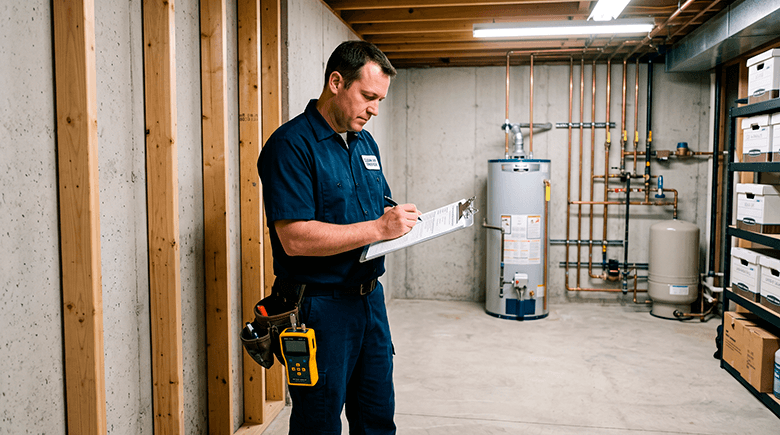 Final technical documentation package detailing the successful remediation and clearance of the contamination zone.
Long-Term Moisture Management and Fungal Prevention
The remediation process does not end with the removal of mold; it concludes with the long-term management of the underlying conditions that allowed for the growth in the first place. In the Pittsburgh metro area, persistent groundwater issues and high atmospheric humidity require a proactive stance toward moisture control. Our specialists provide property owners with custom-tailored mitigation strategies, including the installation of high-capacity basement dehumidification systems, the improvement of sub-slab drainage networks, and the sealing of foundation cracks that act as moisture conduits.
By transforming your property’s environment from a moisture-prone setting into a climate-controlled zone, we effectively eliminate the potential for future fungal blooms. Our commitment is to restore your property’s structural integrity and ensure it remains a clean, healthy space for you and your family. We utilize ongoing moisture monitoring protocols to ensure that once the remediation is verified, the environment remains stable, dry, and clean, preventing the cycle of recurring mold contamination that plagues aging residential infrastructure throughout the Allegheny County region.